The Dark Psychology of Conspiracy Theories: Why Our Brains Crave Patterns
Welcome to HotHootNews, where you can find the latest information, the fastest and hottest news source without delay and without censorship. Through https://hothootnews.blogspot.com/, we are here to uncover the dark history behind various scandals and thoroughly explore current controversial issues. We present raw facts and historical context directly, without further ado. If an event is going viral, breaking news, or about to make history, you'll read about it here, right now. Click, read, and prepare to be shocked by the unfiltered truth! Happy reading, you'll definitely enjoy it.
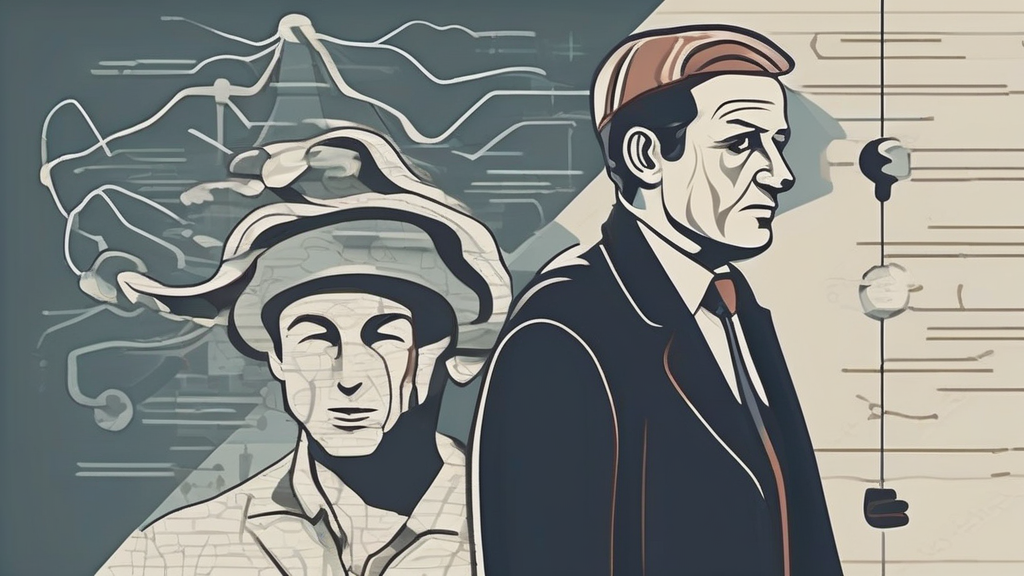
Understanding why humans believe conspiracy theories more easily than objective facts requires us to look deep into the wiring of our own minds. We aren't naturally built to be cold, calculating data processors; we are built for survival, pattern recognition, and narrative building.
- Conspiracy theories offer a sense of control and meaning when the world feels chaotic or unpredictable.
- Our brains are evolutionarily predisposed to find patterns in random noise, a trait known as illusory pattern perception.
- Social identity and the need to feel unique or "in the know" drive the adoption of fringe beliefs.
The Evolutionary Roots of Pattern Recognition
Think back to our ancestors on the savanna. If you heard a rustle in the grass, you had two choices: assume it was the wind or assume it was a predator. If you guessed it was a predator and were wrong, you just looked silly. If you guessed it was the wind and were wrong, you became lunch.
This bias toward assuming agency—the idea that something is acting upon the world with intent—is a survival mechanism. We are hardwired to look for agency detection. Today, we don't have lions in the grass, but we have economic crashes, pandemics, and political scandals. Our brains still treat these complex, systemic events as if they were predators.
We struggle to accept that big, scary events might just be the result of chaos or random chance. It is far more comforting to believe that a shadowy group is pulling the strings than to admit that nobody is actually in control. This is the bedrock of apophenia, the human tendency to perceive meaningful connections between unrelated things.
The Comfort of a Narrative
Humans are storytelling animals. We crave a beginning, a middle, and an end. When a major tragedy occurs, the official account often feels incomplete or emotionally unsatisfying. It lacks a clear villain or a grand design.
Conspiracy theories fix this by providing a clean, coherent narrative. They turn a messy reality into a battle between good and evil. When you view the world through this lens, you aren't just a victim of circumstance; you are a truth-seeker fighting against a hidden enemy.
Why Humans Believe Conspiracy Theories More Easily During Crises
When our personal sense of security is threatened, our cognitive defenses change. Research consistently shows that feelings of powerlessness and anxiety are massive predictors of belief in misinformation. When you feel like you have no influence over your life, the allure of hidden knowledge becomes intoxicating.
Believing in a conspiracy theory provides a psychological safety net. It offers an explanation for our suffering and, more importantly, it suggests that if we could just expose the "truth," we could reclaim our agency. It’s an intellectual shortcut to feeling powerful again.
The Role of Epistemic and Existential Motives
Psychologists often break down these motivations into two main categories: epistemic motives and existential motives. Epistemic motives are about our need for clarity and accuracy. We want to understand our environment, and when the official story feels too complex or contradictory, we fill in the gaps with our own theories.
Existential motives, on the other hand, are about our need for safety and significance. We want to feel safe, and we want to feel like our lives matter. Conspiracy theories provide a sense of superiority—you are part of the enlightened few who can "see" what the masses miss. This creates a powerful sense of community, even if that community is built on a foundation of skepticism.
The Social Cost of Being "In the Know"
Belief isn't just about facts; it’s about identity. Once someone attaches their self-worth to a specific belief system, challenging that belief feels like a personal attack. This is why facts rarely change the minds of conspiracy theorists.
When you present evidence that contradicts their worldview, you aren't just presenting data; you are threatening their social circle and their internal sense of self. This phenomenon is closely related to cognitive dissonance, where the brain goes to great lengths to ignore information that conflicts with established beliefs.
Practical Strategies to Combat Misinformation
If we want to stop falling for these traps, we have to start by being honest about our own cognitive limitations. We all have blind spots. We all want to feel like we are the heroes of our own stories.
- Practice intellectual humility: Recognize that your brain is designed to seek patterns, even where none exist.
- Slow down your reaction: If a piece of news makes you feel angry, righteous, or vindicated, pause before sharing it. High-emotion content is designed to bypass your critical thinking.
- Look for the boring answer: Most of the time, the truth isn't a secret plot; it’s just bureaucratic incompetence, human error, or simple bad luck.
The next time you encounter a theory that explains everything perfectly, ask yourself: does this explain the world, or does it just make me feel better about a world I don't fully understand? Critical thinking isn't about being cynical; it’s about being brave enough to accept that some questions don't have neat, dramatic answers.
Frequently Asked Questions (FAQ)
Why are conspiracy theories so addictive to the human brain?
They are addictive because they provide immediate emotional relief. They turn complex, terrifying, or random events into simple stories with clear villains, which helps satisfy our innate desire for order and control.
Can logic and facts effectively change a conspiracy theorist's mind?
Generally, no. Because these beliefs are tied to social identity and emotional needs, presenting cold facts often causes the person to double down. Change usually only happens through empathetic, long-term personal connection rather than direct debate.
Is it possible to be immune to conspiracy thinking?
No one is entirely immune, as we all share the same basic brain architecture. However, by practicing metacognition—thinking about how we think—and actively seeking out diverse perspectives, we can significantly reduce our susceptibility to misinformation.
If you like my website articles, please leave a comment below and don't forget to follow my website.
Post a Comment for "The Dark Psychology of Conspiracy Theories: Why Our Brains Crave Patterns"