The Dyatlov Pass Incident: A Forensic Breakdown of the Most Baffling Mountaineering Tragedy
Welcome to HotHootNews, where you can find the latest information, the fastest and hottest news source without delay and without censorship. Through https://hothootnews.blogspot.com/, we are here to uncover the dark history behind various scandals and thoroughly explore current controversial issues. We present raw facts and historical context directly, without further ado. If an event is going viral, breaking news, or about to make history, you'll read about it here, right now. Click, read, and prepare to be shocked by the unfiltered truth! Happy reading, you'll definitely enjoy it.
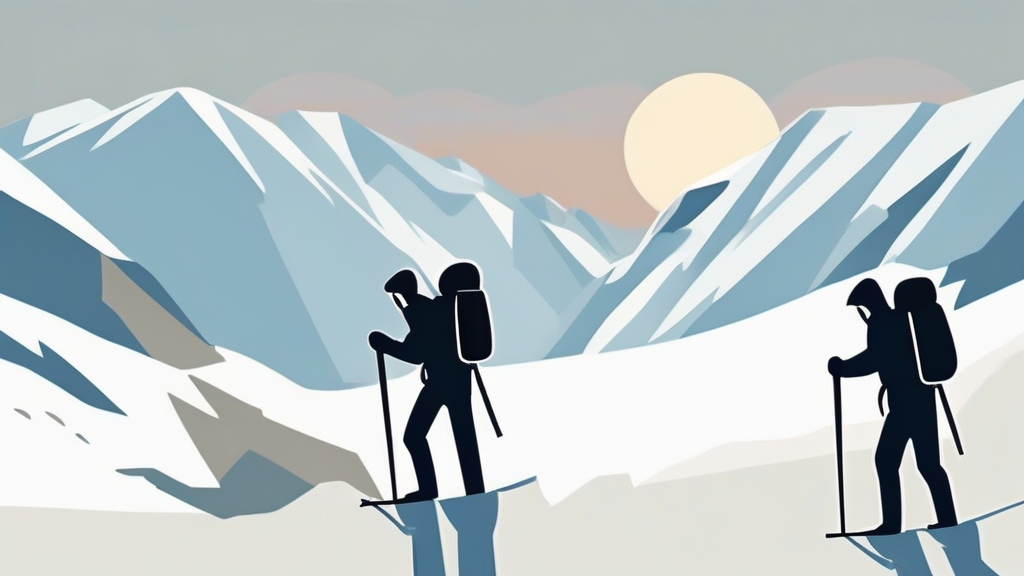
In February 1959, nine experienced hikers vanished into the Ural Mountains. They never returned. When search parties finally located their tent, it had been cut open from the inside. The campers were gone, barefoot in the snow, fleeing a terror that remains one of the most chilling unsolved mysteries: strange facts from the greatest tragedies of the past. I’ve spent years analyzing the forensic reports, and frankly, the facts are as baffling today as they were decades ago.
Why would seasoned mountaineers abandon their shelter during a blizzard? Why did they suffer internal injuries that resembled a high-speed car crash, yet show no external bruising? These are the questions that haunt researchers. Let’s strip away the urban legends and look at the hard, cold data.
The Forensic Breakdown of Unsolved Mysteries: Strange Facts from the Greatest Tragedies of the Past
The Dyatlov Pass incident isn't just a story about lost hikers. It is a puzzle of physics, physiology, and environment. When the recovery teams found the bodies, the state of the victims defied conventional wisdom. Some were partially dressed, while others were practically naked. They weren't just victims of the elements; they were victims of a paradox.
The medical examiner noted that some hikers had fractured skulls and broken ribs. These injuries were catastrophic. Yet, there were no signs of a struggle with another human being. No footprints other than their own led away from the tent. How do you explain such violence in a desolate, frozen landscape?
The Katabatic Wind Theory and Physical Trauma
Some experts argue that a rare weather phenomenon known as a katabatic wind caused the tent to collapse. If a massive gust of wind struck the side of the mountain, it could have triggered a localized slab avalanche. The weight of the snow would explain the crushed chests and fractured bones.
However, the tent was not buried under deep snow. It was found mostly intact, albeit slashed. If an avalanche had hit, the tent should have been crushed flat. The physical trauma remains a thorn in the side of every forensic investigator trying to make sense of these unsolved mysteries: strange facts from the greatest tragedies of the past.
The Timeline of the Final Night
The group, led by Igor Dyatlov, had been documenting their journey meticulously. Their diaries end abruptly on February 1st. They had established a camp on the slopes of Kholat Syakhl, which literally translates to "Dead Mountain" in the local Mansi language. A bit on the nose, right?
The sequence of events is agonizingly short:
- The group sets up camp on the exposed slope.
- A sudden event forces them to cut their way out of the tent.
- They retreat toward the tree line, roughly 1.5 kilometers away.
- They build a fire, but the cold eventually overcomes them.
- They attempt to return to the tent, failing one by one in the dark.
There is a frantic, desperate quality to these movements. They didn't walk; they fled. They didn't pack; they abandoned everything. Whatever they feared was more immediate than the sub-zero temperatures waiting for them outside.
Radiation and the Paradox of the Missing Tongue
You’ve probably heard the rumors about radiation. It’s true that some of the hikers' clothing showed elevated levels of beta radiation. But was this a government cover-up or a mundane byproduct of the era? Some scientists point to the proximity of the Mayak nuclear facility, but the levels found were inconsistent with fallout.
Then there is the issue of the missing tongue. One of the victims, Lyudmila Dubinina, was found with her tongue missing. Tabloid journalists jumped on this, claiming ritual sacrifice or alien abduction. A more grounded forensic look suggests that the body, lying face down in a stream, simply succumbed to decomposition and scavenger activity. It’s gruesome, sure, but nature is often more efficient than we like to admit.
Human Error vs. Environmental Anomaly
Could the tragedy have been a simple case of panic? Humans are remarkably irrational when they are terrified. If the hikers heard a loud, booming sound—perhaps a sonic boom or an infrasound event—they might have experienced a collective psychological break. Infrasound, a low-frequency noise, is known to induce feelings of anxiety, dread, and even visual hallucinations.
Imagine being trapped in a tent, hearing a sound that vibrates your very bones, feeling like something is crushing your chest. You wouldn't think logically. You would run. The "Dyatlov Pass" enigma persists because it sits at the intersection of what we know and what we refuse to accept about our own fragility.
Lessons from the Slopes of Kholat Syakhl
Looking at these unsolved mysteries: strange facts from the greatest tragedies of the past teaches us that nature doesn't care about our plans. We like to think that with enough gear and experience, we are safe. We aren't. Mountaineering is an exercise in managed risk, and sometimes, the risk is completely invisible.
I’ve hiked in conditions that would make most people turn back, and I know that feeling of being small against a mountain. You realize quickly that the mountain doesn't have a plan for you. It just exists. That is the most terrifying part of the Dyatlov story. There was no villain. There was no monster. There was just the mountain, the weather, and a group of people who ran out of luck.
Why We Are Still Obsessed
Why do we keep coming back to this? Why do millions of people read about a tragedy from 1959? Because we hate gaps in our knowledge. We want a neat, tidy ending where the detective solves the case and the world makes sense again. The Dyatlov Pass doesn't give us that.
It remains a testament to the fact that some things are lost to time. Forensic science has advanced leaps and bounds since the fifties, yet we are still arguing over the same set of photographs and autopsy reports. Maybe the point isn't to solve it. Maybe the point is to respect the weight of what happened to those nine individuals.
A Final Thought on the Evidence
If you look at the evidence objectively, you have to accept that we might never know the full truth. The tent slashes, the internal injuries, the missing clothing—it’s a collection of data points that refuse to align. Every time a new theory emerges, it explains one piece of the puzzle while creating three more.
Is it possible that a combination of factors—an avalanche, hypothermia, and mass panic—all converged at the exact same moment? It’s the most likely explanation, but it feels hollow. It doesn't satisfy the human need for a narrative. But in the real world, tragedy doesn't need a narrative. It just needs a moment where things go wrong.
If you are interested in the intersection of history and science, keep digging into these cases. There is so much to learn about how we interpret the past. Have you ever encountered a story that completely defied your sense of logic? Share your thoughts or reach out if you want to analyze another historical anomaly. We might not find the answers, but the search is where the real insight happens.
If you like my website articles, please leave a comment below and don't forget to follow my website.
Post a Comment for "The Dyatlov Pass Incident: A Forensic Breakdown of the Most Baffling Mountaineering Tragedy"