The Power of Tribalism: Why Identity Politics Feeds Conspiracy Thinking
Welcome to HotHootNews, where you can find the latest information, the fastest and hottest news source without delay and without censorship. Through https://hothootnews.blogspot.com/, we are here to uncover the dark history behind various scandals and thoroughly explore current controversial issues. We present raw facts and historical context directly, without further ado. If an event is going viral, breaking news, or about to make history, you'll read about it here, right now. Click, read, and prepare to be shocked by the unfiltered truth! Happy reading, you'll definitely enjoy it.
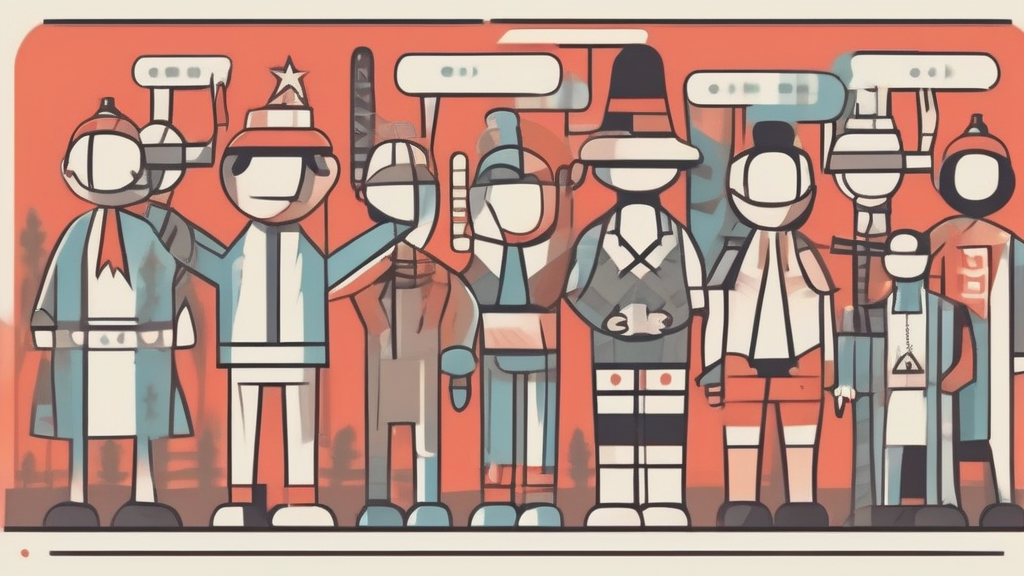
When we look at the state of modern discourse, it is clear that group identity and conspiracy theory belief are becoming increasingly inseparable. We aren't just disagreeing on policy anymore; we are living in entirely different versions of reality, curated by the tribes we call home.
- Tribalism provides a sense of belonging that makes individuals more susceptible to narratives that protect their in-group status.
- Conspiracy theories serve as defensive tools, allowing groups to blame "out-groups" for collective anxieties or perceived losses of status.
- Critical thinking is often sidelined by the psychological drive to maintain social cohesion within one's chosen political or cultural circle.
The Psychology of Belonging and Belief
Why do we cling to narratives that seem objectively false? The answer lies in the deep-seated human need for social identity. When you identify strongly with a group, your brain starts to treat an attack on that group’s ideology as a direct attack on your own survival.
It’s not just about politics; it’s about safety. If everyone in your social circle agrees that a specific event was a "false flag," adopting that belief is a social signal. It says, "I am one of you." Conversely, questioning that belief can lead to social ostracization, which is something our brains are wired to fear more than almost anything else.
The Protective Function of Conspiracies
Conspiracy theories provide a sense of order in a chaotic world. When our tribe feels threatened—perhaps by changing demographics or economic shifts—we look for a culprit. Blaming a shadowy "other" is far more comforting than admitting that the world is complex, random, and often indifferent to our specific group’s needs.
This is where the concept of in-group and out-group dynamics becomes dangerous. Once you define who is "us" and who is "them," the "them" becomes a convenient vessel for every societal ill. This isn't a bug in human cognition; it’s a feature, albeit a primitive one that hasn't quite caught up to the internet age.
How Group Identity Fuels Misinformation
The internet has turned tribalism into a high-speed engine for misinformation. Algorithms are designed to feed us what we already believe, creating echo chambers that reinforce our existing biases. If I believe my tribe is the hero of the story, I am much more likely to share a wild, unverified claim if it makes the opposing tribe look like the villain.
We see this play out in real-time on social media. A conspiracy theory gains traction not because it has evidence, but because it has emotional utility. It validates the grievances of the group. If the theory makes the "other side" look evil, it is shared widely without a second thought. Accuracy takes a backseat to tribal loyalty.
The Role of Status and Power
Conspiracy thinking often spikes when a group feels its status is slipping. When people perceive that their influence is waning, they are more likely to seek out narratives that explain their loss of power as the result of a coordinated plot. This is a form of psychological armor.
It’s easier to believe that a secret cabal stole your future than to accept that systemic, mundane economic changes are responsible. The former allows for the possibility of a "rescue" or a "rebellion," while the latter requires the uncomfortable work of adapting to a new reality. Conspiracy theories effectively offer a shortcut to feeling empowered again.
Breaking the Cycle of Tribal Distortion
How do we stop this slide into polarized fantasy? The first step is acknowledging that no one is immune to tribal bias. It is easy to point fingers at the "other side" and call them paranoid, but every group has its own set of sacred cows and unquestionable narratives.
Cultivating intellectual humility is the ultimate antidote. This means being willing to change your mind when faced with new information, even if that information makes your group look bad. It is a painful process, but it is necessary for a functional society.
Practical Steps for Individual Clarity
- Diversify your information diet: Actively seek out perspectives from people who don't share your political identity.
- Pause before you share: If a headline makes you feel an immediate, intense surge of anger or vindication, that is a red flag.
- Focus on verifiable evidence: Distinguish between opinions and claims of fact that can be proven or disproven by multiple, independent sources.
True independence of thought requires the courage to stand apart from your tribe when the facts demand it. It is the only way to ensure that your worldview remains rooted in reality rather than in the comfort of a shared delusion.
Addressing the Core of Tribal Misbelief
We have to talk about the "Great Replacement" or similar polarizing narratives that have emerged in recent years. These aren't just fringe ideas; they are manifestations of deep-seated anxiety about identity. When people feel that their culture or way of life is being erased, they become hyper-vigilant.
This hyper-vigilance makes them prime targets for conspiratorial thinking. By framing the world as a zero-sum game, these theories convince people that they must destroy the "enemy" to survive. It is a tragic irony that in trying to protect their identity, people often adopt beliefs that erode the very social fabric they claim to value.
Final Thoughts on Reality and Identity
We are social creatures, and we will always have a need to belong. However, we have to recognize that our desire for tribal belonging can be hijacked by those who profit from division. Conspiracy theories aren't just about "crazy" ideas; they are about the human struggle to find meaning in a world that feels increasingly fragmented.
If we want to reclaim our capacity for objective reasoning, we must prioritize truth over tribal signaling. It starts with the individual, the person who decides that being right is less important than being honest. It is a slow, quiet work, but it is the only way to bridge the chasm that tribalism has dug beneath our feet.
Frequently Asked Questions (FAQ)
Why do people believe in conspiracy theories even when evidence contradicts them?
Belief in these theories is rarely about facts; it is about emotional needs. People hold onto these beliefs because they provide a sense of community, purpose, and protection for their social identity, making the truth secondary to group cohesion.
How does tribalism affect our ability to process news?
Tribalism creates a filter through which we interpret events. We tend to accept information that supports our group's narrative while reflexively rejecting or ignoring evidence that challenges our in-group's worldview.
Can you stop someone from falling into a conspiracy rabbit hole?
Direct confrontation rarely works because it triggers a defensive response. The most effective approach is to ask open-ended, non-judgmental questions that encourage the person to think through the logic of their claims themselves, rather than attacking the beliefs directly.
If you like my website articles, please leave a comment below and don't forget to follow my website.
Post a Comment for "The Power of Tribalism: Why Identity Politics Feeds Conspiracy Thinking"