Deepfakes and AI: How to Identify Synthetically Generated Media in Seconds
Welcome to HotHootNews, where you can find the latest information, the fastest and hottest news source without delay and without censorship. Through https://hothootnews.blogspot.com/, we are here to uncover the dark history behind various scandals and thoroughly explore current controversial issues. We present raw facts and historical context directly, without further ado. If an event is going viral, breaking news, or about to make history, you'll read about it here, right now. Click, read, and prepare to be shocked by the unfiltered truth! Happy reading, you'll definitely enjoy it.
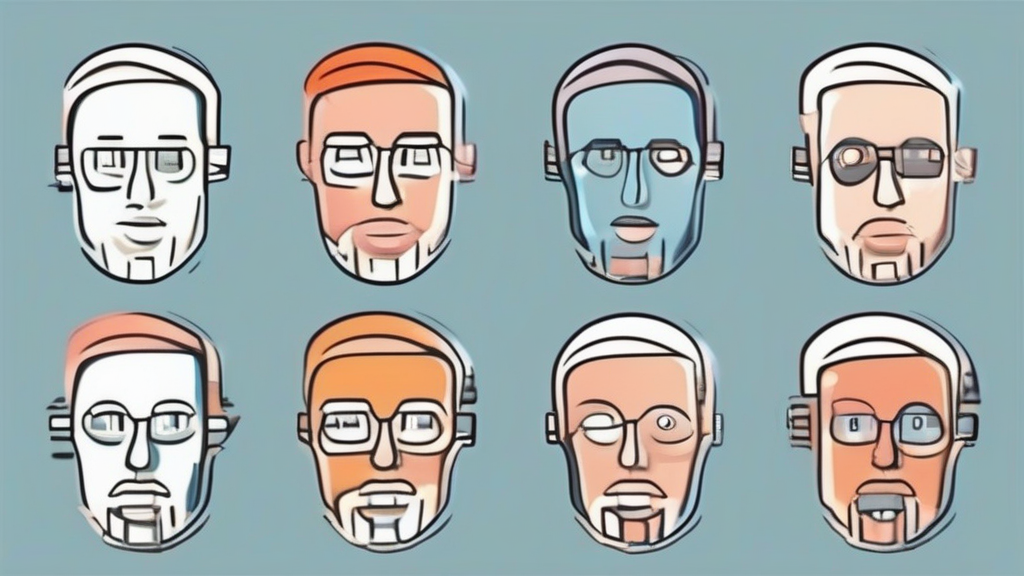
I remember the first time I saw a video of a world leader saying something completely absurd. My brain did a double-take. It looked like him, sounded like him, and even had his signature hand gestures. But deep down, something felt off. That sinking realization? That was my first encounter with a sophisticated deepfake. It’s scary, right? You might be asking yourself: Don't Be Fooled Again! The Most Effective Way to Differentiate Real News from Hoaxes in 1 Minute.
The truth is, we are living in an era where seeing is no longer believing. Synthetic media is evolving faster than our ability to track it. Whether you are an online business owner protecting your brand or just someone scrolling through social media, you need a toolkit to spot the fakes. Let’s break down exactly how you can defend your sanity and your data.
Understanding the Mechanics of Synthetic Media
Before we can spot the fakes, we have to understand what we are dealing with. At its core, this technology uses machine learning to synthesize human imagery and audio. It’s not just Photoshop on steroids; it’s a predictive model that maps facial movements and vocal patterns to generate something entirely new.
Think of it like a very advanced digital puppet show. The AI "learns" how a specific person talks and moves by processing thousands of hours of existing footage. Once it has enough data, it can make that person say anything the creator wants. This is where the danger lies, especially when it comes to misinformation.
The Anatomy of a Deepfake
Why do these videos look so convincing? It’s because the algorithms are trained to identify their own mistakes. One part of the AI creates the image, while another part acts as a critic, constantly checking if the image looks "real" enough. They keep doing this until the critic can’t tell the difference.
However, no matter how good the AI gets, it still struggles with the laws of physics and human biology. It might get the skin tone perfect, but it often fails at the subtle micro-movements of the eyes or the way light interacts with the inner ear. These are your breadcrumbs.
Don't Be Fooled Again! The Most Effective Way to Differentiate Real News from Hoaxes in 1 Minute
You don't need a degree in computer science to stay safe. You just need a healthy dose of skepticism and a checklist. When you encounter a video that seems suspicious, take sixty seconds to analyze it before you hit that share button. Speed is the primary tool of the hoaxer; don't give them the satisfaction of your impulse.
Visual Clues That Give the Game Away
Start with the eyes. Are they blinking naturally? AI often forgets that humans blink at irregular intervals. If the person in the video is staring intensely without blinking, or if their blinking looks like a rhythmic, mechanical pulse, you are likely looking at a synthetic creation.
Next, look at the edges of the face. Specifically, check the jawline and the hairline. Does the skin look like it’s melting into the background? Sometimes the AI struggles to blend the "mask" onto the original actor’s head, leaving behind a subtle, blurry halo. It’s a dead giveaway.
Auditory Red Flags and Audio Artifacts
Listen closely to the audio. Does the voice sound a bit robotic or metallic? Even with advanced voice cloning, there is often a lack of natural breathing patterns. Real humans take micro-pauses to inhale. AI voices often run on forever without taking a breath.
Check for background noise. In a real recording, the ambient sound should be consistent. If the person’s voice sounds like it’s in a studio but the background noise sounds like a busy street, that’s a major red flag. Audio and video are often synthesized separately and stitched together, and they rarely match perfectly.
The Role of Digital Literacy in the AI Age
We are currently facing a crisis of trust. When anything can be faked, everything becomes suspect. This is why digital literacy is no longer a luxury—it’s a survival skill. We have to teach ourselves to verify sources before we let an emotional reaction dictate our actions.
If a video makes you extremely angry or fearful, that is exactly what the creator wanted. They are banking on your emotional response to bypass your critical thinking. Take a step back. Ask yourself: who released this? Is it from a reputable news outlet, or a random account with no history?
Practical Steps for Business Owners
If you run an online business, your reputation is your most valuable asset. A well-placed deepfake of your CEO could tank your stock or ruin your customer trust in an afternoon. You need to have a clear protocol for how your company handles misinformation.
- Establish an official channel for verified communications.
- Use watermarks on all your company’s internal and external video content.
- Educate your team on the signs of synthetic media.
- Have a crisis response plan ready to debunk fakes immediately.
Why Context is Everything
Often, the video isn't even "fake" in the technical sense; it's just taken out of context. A video from five years ago might be re-circulated as if it happened yesterday. This is a common tactic in information warfare. Always check the original source and the date.
Look for other coverage. If a world leader just made a major announcement, why isn't it on every mainstream news site? If you are the only one seeing this "breaking news," you are likely looking at a hoax. Trust your gut when something feels too sensational to be true.
The Future of Authentication
We aren't defenseless. Technology is being developed to fight this. Companies are working on cryptographic signatures that can prove a video hasn't been altered since it was recorded. Think of it as a digital fingerprint that verifies the authenticity of the file.
However, we shouldn't rely solely on software to save us. The ultimate firewall is still the human brain. By staying informed and refusing to share unverified content, we can collectively starve the hoaxers of the oxygen they need to thrive. Every time you verify before you share, you are helping to keep the digital ecosystem a little bit cleaner.
Final Thoughts on Staying Vigilant
The goal of these tools isn't to make you paranoid. You don't have to doubt every single video you see. But you do need to be a more discerning consumer of information. When you see something that triggers a strong reaction, pause. Take that one minute to analyze the eyes, the audio, and the source.
Remember that you have the power to stop the spread of misinformation. By being the person who checks the facts, you set an example for your friends, your family, and your colleagues. Stay curious, stay skeptical, and keep your eyes sharp. We are all in this together, and a little bit of caution goes a long way in keeping the internet a place where truth still matters.
If you like my website articles, please leave a comment below and don't forget to follow my website.
Post a Comment for "Deepfakes and AI: How to Identify Synthetically Generated Media in Seconds"