Conspiracy or Fact? How Big Companies Control Your Personal Data
Welcome to HotHootNews, where you can find the latest information, the fastest and hottest news source without delay and without censorship. Through https://hothootnews.blogspot.com/, we are here to uncover the dark history behind various scandals and thoroughly explore current controversial issues. We present raw facts and historical context directly, without further ado. If an event is going viral, breaking news, or about to make history, you'll read about it here, right now. Click, read, and prepare to be shocked by the unfiltered truth! Happy reading, you'll definitely enjoy it.
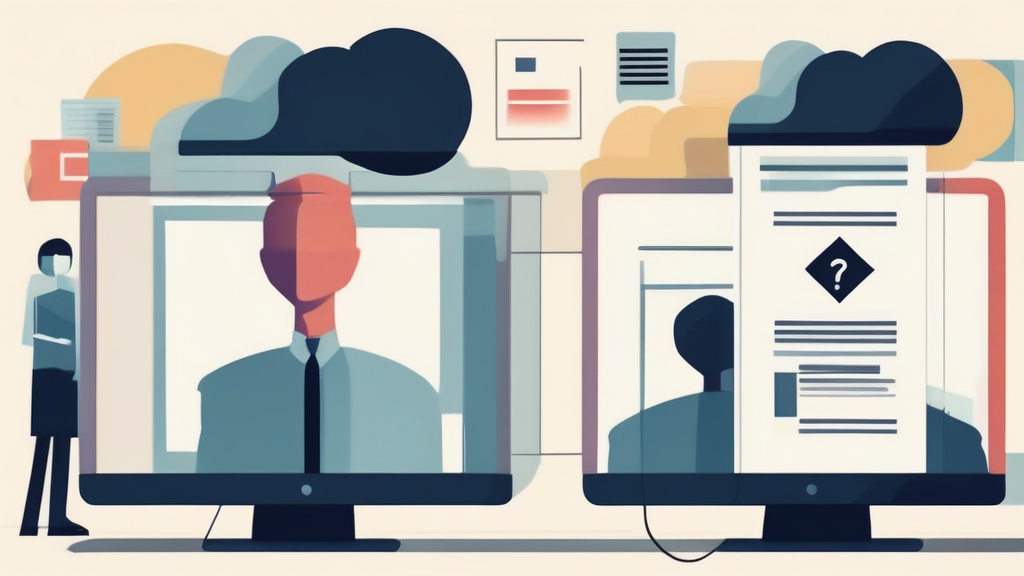
Every time you unlock your smartphone or scroll through your social media feed, you are leaving behind a digital breadcrumb trail. It feels like a simple, harmless act of convenience. But is it just a routine interaction, or are you handing over the keys to your life? When we ask, Conspiracy or Fact? How Big Companies Control Your Personal Data, we aren't just talking about paranoia. We are talking about the foundation of the modern internet economy.
I remember a time when privacy was the default setting. You walked down the street, you bought a coffee with cash, and you were essentially a ghost to the world. Today, that world is gone. The reality is that your preferences, your location, and even your emotional state are harvested, packaged, and sold to the highest bidder.
The Mechanics of Modern Data Harvesting
How do they actually do it? It isn't magic. It is a sophisticated architecture designed to turn your behavior into profit. Most of these companies rely on web tracking technologies that follow you across the internet, even when you aren't on their specific platform.
Think about the last time you searched for a pair of running shoes. Suddenly, those shoes appeared in every sidebar, every social media post, and every news site you visited for the next week. That isn't a coincidence. It is an algorithmic echo chamber designed to nudge you toward a purchase.
Is the Surveillance Economy a Conspiracy or Fact? How Big Companies Control Your Personal Data
Some call it surveillance capitalism. Others call it personalized advertising. The terminology changes, but the result remains the same. Massive corporations build detailed profiles on every single user, often referred to as a "digital twin."
This isn't just about what you buy. It is about your political leanings, your health concerns, and your relationship status. By aggregating this data, companies can predict your future actions with startling accuracy. If you think this is all just a conspiracy, you haven't read the fine print in the terms of service agreements that almost everyone skips.
The Hidden Cost of "Free" Services
We love free apps. We love free email. We love free maps. But as the old adage goes, if you aren't paying for the product, you are the product. When you sign up for these services, you are effectively entering a trade: your personal information for access to their platform.
This creates a massive power imbalance. You have no idea who is buying your data, how long they keep it, or what they intend to do with it once they have it. Once your information leaves the original source, it enters a secondary market where it can be traded among brokers who have no relationship with you at all.
The Role of Data Brokers
Behind the scenes, there is an entire industry dedicated to buying and selling your digital identity. These entities are known as data brokers. They don't have a direct relationship with you, yet they likely know more about your financial history than your own bank does.
They collect information from public records, social media profiles, and retail loyalty programs. Then, they synthesize it into a report that gets sold to insurance companies, lenders, and marketers. It is a shadow economy that operates entirely outside the public eye.
Why Digital Privacy Matters
You might tell yourself, "I have nothing to hide." I hear this all the time. But privacy isn't about hiding secrets; it is about maintaining autonomy. When a company knows exactly how to manipulate your emotions or target your insecurities, you lose the ability to make truly independent choices.
Consider the impact on information privacy. When your data is compromised or misused, it can affect your credit score, your job prospects, and even your personal security. It is not just about ads; it is about the structural control these corporations have over your life.
- Manipulation: Algorithms are designed to keep you scrolling, which can lead to addiction and mental health issues.
- Discrimination: Algorithms can be biased, potentially denying you services or opportunities based on your data profile.
- Security Risks: Every piece of data stored is a target for hackers. The more they have on you, the more damage a breach can cause.
Practical Steps to Reclaim Your Data
You aren't entirely powerless. While you can't opt out of the digital age, you can definitely make it harder for these companies to track you. It starts with a shift in mindset. Treat your data like you treat your wallet—don't just hand it out to anyone who asks.
Start by auditing your accounts. Go through your smartphone settings and look at which apps have permission to access your location, your microphone, and your contacts. Do they really need that access to function? If the answer is no, turn it off immediately.
Tools for Better Digital Hygiene
I recommend using privacy-focused browsers and search engines. These tools are built to block trackers by default. They aren't perfect, but they significantly reduce the amount of noise you generate while browsing.
- Use a VPN to mask your IP address and encrypt your traffic.
- Switch to encrypted messaging apps that don't store your chat history on their servers.
- Use a password manager to ensure you aren't reusing the same credentials across multiple sites, which makes a data breach much more dangerous.
- Opt out of "interest-based" advertising in your browser and phone settings.
The Future of Data Ownership
We are seeing a slow shift in public opinion. People are tired of being tracked, and governments are starting to take notice with regulations like the GDPR in Europe and the CCPA in California. These laws are a start, but they are not a silver bullet.
The true power lies in the hands of the consumer. As more people demand transparency, companies will be forced to change their business models. If we stop supporting platforms that treat our data as a commodity, they will eventually have to pivot to a model that respects our privacy.
It is a slow process, but it is necessary. The era of unchecked data harvesting is reaching a breaking point. Corporations will continue to push the boundaries of what is acceptable, but only as long as we let them. Your data is your property. Start acting like the owner.
Are you ready to take back control? It won't happen overnight, but you can start today by changing one setting, installing one privacy tool, or simply questioning why an app needs to know your location to show you a weather forecast. Your digital footprint is yours alone—keep it that way.
If you like my website articles, please leave a comment below and don't forget to follow my website.
Post a Comment for "Conspiracy or Fact? How Big Companies Control Your Personal Data"